










Ever-So-Lean Podcast
The Ever-So-Lean Podcast is the destination for exploring how Leadership and Continuous Improvement support High Performance. Come and join us as we share the real-life experiences of global industry leaders and front-line workers, diving deep into their journeys of triumph and adversity. Each episode offers genuine insights, practical wisdom, and valuable takeaways to support your path to excellence.
Whether you’re striving for personal excellence or leading a team toward new heights, the Ever-So-Lean Podcast offers the fuel you need to transform your vision into reality. Discover us on all major podcast platforms or visit www.eversolean.com and take the first step toward becoming the leader you were meant to be.
Listen on:
Episodes
Monday Jul 03, 2023
Monday Jul 03, 2023
Today's episode is all about Project Selection and Statistical Analysis, where we aim to provide you with practical guidance and insights. We understand that choosing the right projects can be overwhelming, but fear not! We are here to help you transform problems into well-defined projects that lead to growth and success. Building a strong pipeline of projects is essential for addressing organizational challenges and driving progress.
Statistical Analysis, though initially intimidating, is a fascinating realm that holds great power in continuous improvement. It enables us to summarise data, test hypotheses, and make evidence-based decisions that bring about impactful changes. In this episode, we will gently introduce you to three statistical analysis techniques: the '2 Sample T-Test', Correlation Analysis and Regression Analysis.
Consider this episode as a refreshing sip of a tropical cocktail of statistical knowledge, leaving you craving for more. And joining us today is Pranav Radhakrishnan, a distinguished Director at Novartis, a leading global pharmaceutical company. With his expertise in Operational Excellence and Lean Six Sigma, a Masters in Industrial Engineering, a pending MBA from Columbia University and a remarkable career journey, Pranav brings a unique and knowledgeable perspective to project selection and statistical analysis.
Together, we will explore practical strategies and inspiring experiences that will empower you to prioritize strategic projects, drive financial growth, and enhance engagement. Get ready to unlock the secrets of Project Selection and Statistical Analysis with Pranav's invaluable insights.
Key Takeaways:
Learn to select the right tool for the right problem. It comes with experience.
Pranav gave a great method of taking problems to projects, that directly relate to the business objectives.
Get people together, directors, department leads, supervisors, front line employees. All roles – get them in a room.
Look at overarching operational strategic objectives. Large scale objectives. 3 or 4 is sufficient. Then rank these by importance with a score of 1-10. 10 being most important.
As a group, brainstorm using post it notes to document the biggest opportunities and issues that people see. No rules, just get them all noted down. If struggling, try a negative brainstorm and then flip the outputs to create opportunities.
Then group the post it notes by categories e.g. processes or services.
Think about the effort vs ease vs impact of the issues noted. An impact matrix is a great tool for this. Colour code them if it helps.
Next up, use a cause and effect matrix style process to help determine which to focus on. Rank each problem by importance, on a scale of 0-10 (10 being critical).
Then rank each opportunity one by one to see correlation to each strategic goal. Give it a 0 if no relation, a 1 if minimal, a 5 if some correlation and 9 for highly correlated. Do this for each issue.
This will generate more debate and discussion. This is good. Come to a consensus to Identify which issues relate to each of the pre-defined objectives. Facilitate the conversation, staying neutral if you can.
Now for each problem, simply add the scores up. You’ll be left with a valuable list of issues, ranked and aligned to your organisation’s strategic direction. Super useful mechanism to build an impactful roadmap for both short term and longer-term transformation.
Statistical analysis brings objectivity, rigor, and evidence-based decision-making to CI. It helps uncover insights, quantify uncertainties, test hypotheses, predict future outcomes, and evaluate performance, enabling organizations to stay competitive in a rapidly evolving business environment. Today we focus on 3 commonly used statistical analysis approaches:
We looked at the 2 sample T test technique This is used to compare the means of two independent groups or samples to determine if they are significantly different from each other. It helps to assess whether any observed differences between the groups are statistically significant or simply due to random chance. Let's say a coffee shop owner wants to determine whether there is a significant difference in the average time it takes to serve customers during the morning shift and the afternoon shift. The owner collects data on the time taken to serve 50 customers during the morning shift and 50 customers during the afternoon shift. The owner wants to know if there is evidence to suggest that one shift is significantly faster than the other. By conducting the two-sample t-test, the coffee shop owner can determine if there is a statistically significant difference in serving times between the morning and afternoon shifts. This information can be valuable for making staffing decisions, optimizing workflow, or identifying areas for improvement in service efficiency.
We explored Correlation analysis. This technique is used to measure the strength and direction of the relationship between two variables. It helps to determine whether there is a systematic association between the variables and to what extent they vary together. Consider a researcher who wants to examine the relationship between studying hours and exam scores among a group of students. The researcher collects data on the number of hours each student spends studying for an exam and their corresponding exam scores. The researcher wants to determine if there is a relationship between the two variables. By conducting correlation analysis, the researcher can gain insights into the relationship between studying hours and exam scores. This information can be useful for students, educators, and policymakers in understanding the importance of study habits and their impact on academic performance.
Then finally we took a shallow dip into Regression analysis. This technique is used to model and analyze the relationship between a dependent variable and one or more independent variables. It helps to understand how changes in the independent variables are associated with changes in the dependent variable and to make predictions or estimate values based on the observed data. Suppose a real estate agent wants to determine the relationship between the size of a house (in square feet) and its selling price. The agent collects data on recently sold houses, recording the size of each house and its corresponding selling price. The agent wants to predict the selling price of a house based on its size. By conducting regression analysis, the real estate agent can estimate the relationship between house size and selling price. This information can be useful for pricing properties, advising clients, and making informed decisions in the real estate market.
Please don't forget to show your support and help the Ever-So-Lean Podcast thrive by taking a moment to rate and review it, your feedback matters!
Contact Pranav via his LinkedIn profile
Find out more about the British Quality Foundation at www.bqf.org.uk
To find out more about the certifications available with Catalyst Consulting Ltd, visit www.catalystconsulting.co.uk
Enrol in the Online Improvement Kata & Coaching Kata Basics Course. The only Kata training created by Jeffrey K. Liker and Mike Rother!
Find out more about the Ever-So-Lean Podcast at www.eversolean.com
Monday Jun 19, 2023
Monday Jun 19, 2023
Dr. Jeffrey K. Liker is a renowned expert on the Toyota Way and a retired Professor of Industrial and Operations Engineering at the University of Michigan. He is the president of Liker Lean Advisors, where he provides consulting, coaching, and training services based on Toyota's principles. Jeff is the author of multiple influential books, including the international best-seller "The Toyota Way," which has sold over 1.2 million copies worldwide. His books have received prestigious awards and have shaped organizations around the globe.
On the Ever-So-Lean Podcast today, we are privileged to have Jeff as our guest. He will provide valuable insights into Toyota and the Improvement Kata, explaining its role within Toyota's management principles and how it complements other components to foster effective organizational development. Additionally, Jeff will offer an exclusive behind-the-scenes glimpse into his latest co-authored novel alongside Tilo Schwartz "Giving Wings to Her Team," which explores the journey of a character refining her coaching skills in nurturing scientific thinking.
Join us for an engaging conversation with this influential figure, inspiring individuals and organizations worldwide to embrace the Toyota Way for continuous improvement and success.
Key Takeaways:
You can sign up online to visit Toyota Plants on dedicated tours which they offer. Available online.
Toyota train their people by doing. They assign them a coach and let them learn on the job. This supports creating sustainable culture.
The Toyota Way talks about the 4P model.
Philosophy (long term scientific thinking. Thinking about it as a social and technical system with the people at the Centre),
Process (one-piece flow, Lean),
People (observe the process to see when it fails, a process is never perfect, we know it will fail, we expect it, but need to learn how. People see these and find solutions to the problems),
Problem Solving (scientific thinking, understand what happened, what were the conditions that caused the problem, what was the root cause, try alternative solutions, pick the best solution based on data and evidence, that then becomes the new standard)
Managers have yearly targets on quality and productivity. They must think scientifically to solve real problems. A boss is there to develop and coach their people in problem solving. A boss is in a coaching position.
At all levels, allow teams to struggle what “waste time” to solve problems, as this builds a capability. Stand and watch. Observing a process to understand variation
Kata comes from martial arts. Learning movements repeatedly until mastered, repeatable and without thinking. This is Kata. Master one Kata at a time.
Toyota culture is built on people being taught problem solving. Practice, practice, practice.
Toyota Kata is scientific thinking. Targeting achieving levels of performance never seen before. Developing something new or to achieve an aspirational goal. The improvement Kata is the scientific model for improving towards a very difficult goal where there is uncertainty. This is broken down in 4 pieces (or Kata):
Set direction (goal, target, what is the outcome you are looking for)
Understand the current condition (process observation methods, understand cycles, deviations, variations and where are the opportunities)
When you understand where you want to go. Don’t try and go to the end solution in one step. Set a small goal, something you can do quickly and cheaply, setting one-week target conditions e.g. short-term targets)
Run experiments (try things and see what happens. Learn from what happens. Then try something else’s (trial and error will eventually get you to the target condition). It’s all about short term goals (motivating, practical and visualise what that means something to you).
Kata is all about people development, core skill is scientific thinking, describe your goal, understand current condition, what levers to pull to improve the process, not deploy solutions that are guesses, rather testing ideas one by one, proving the work or don’t work, learning from it and so on.
Biggest challenge by far with this approach is having a management culture that is invested in developing their people and learn to coach (manages look for opportunities to train and coach their teams in problems solving, hands on). It will take time, it’s a long-term payoff. This can cause resistance at a senior level. It’s not an online learning process. Thinking learning to play golf, you won’t hit the ball like tiger woods just by watching a video. It takes a hands-on approach, with enough repetition that it becomes like muscle memory (this is Kata).
The way to Engage people is to engage them. Create a focus for them to improve. Grows confidence and motivation.
Enrol in the Online Improvement Kata & Coaching Kata Basics Course. The only Kata training created by Jeffrey K. Liker and Mike Rother!
Find out more about the Jeffery K. Liker at www.likerleanadvisors.com
Learn more and download material and tools about the Improvement Kata by Mike Rother at www-personal.umich.edu/~mrother/Homepage.html
You can get a copy of Dr. Jeffrey K Liker and Tilo Schwartz's new novel on Amazon - https://amzn.to/3LVLw1H
To find out more about the certifications available with Catalyst Consulting Ltd, visit www.catalystconsulting.co.uk
Find out more about the Ever-So-Lean Podcast at www.eversolean.com
Please don't forget to show your support and help the Ever-So-Lean Podcast thrive by taking a moment to rate and review it, your feedback matters!
Monday Jun 05, 2023
Monday Jun 05, 2023
Welcome to another empowering episode of the Ever-So-Lean Podcast! Today, we have a true luminary joining us to delve into the captivating realm of organisational culture and change. Get ready to be inspired by the incredible insights of Karen Leftley, a seasoned change and transformation professional with over three decades of experience driving successful transformations.
Karen's journey in the world of change and transformation took flight during her illustrious 29-year career at BT. As a leader of large-scale change and project teams, she honed her skills and left an indelible mark on the organisation. With expertise grounded in renowned industry practices such as Lean, Six Sigma, Project, and Change Management, Karen became a driving force behind her remarkable accomplishments.
Now serving as the Director and Founder of Boomster Consulting, Karen continues to revolutionise the industry. Her wealth of experience and proven methodologies empower organisations to embrace change and achieve extraordinary results. Notably, Karen's unwavering commitment to excellence is exemplified through her role as the President of the British Quality Foundation (BQF), underscoring her invaluable contributions to the field of business transformation.Karen's prowess extends far beyond her professional achievements. She possesses an exceptional gift for swiftly building deep, trusted relationships with individuals at all levels. Whether collaborating with senior executives on enterprise-wide initiatives or empowering front-line teams, Karen's innate ability to engage and inspire sets her apart. Her passion for ensuring that everyone feels valued and motivated to contribute to the transformation journey is a testament to her outstanding leadership skills.
In this captivating episode, Karen unveils transformative wisdom and practical strategies to shape and change the culture within your organisation. Prepare to gain profound insights into the significance of culture, influencing employee behaviour, customer experiences, talent retention, innovation, and organisational adaptability. By the episode's end, you'll be empowered, confident, and brimming with energy to drive sustained transformation within your organisation.Join us in this enlightening conversation with Karen Leftley as we embark on a riveting exploration of organisational culture and change. Allow her wealth of experience and expertise to inspire and equip you with the tools to create a thriving culture, forging the path to long-term success and exponential growth.
Key Takeaways:
Surround yourself with people that challenge you.
Love what you do. Enjoy it when that happens you deliver results
Create a clear direction where you want to go. What is it that you’re trying to achieve and really identify a clear purpose of why the role people perform within your organisation is important. It goes a long way to helping create that culture set out the value of your team or organisation in terms of expected behaviour.
A loan leader can’t do a great deal on their own, the most successful team and organisations tend to have fellowship and buying across all levels.
Understand what is different about where you are headed versus the current state.
Causing disruption in what people personally value is what causes resistance. So really understand what it is that you’re trying to change and share that knowledge with the team, so that they understand intern as well. You’ll never stop resistance, forming, but following the steps you can be more prepared when it comes.
Be transparent, communicate regularly, and if you can set a cadence so people know when to expect updates and when to expect information.
Involvement where possible helps to reduce the resistance. If there is opportunity to involve people get them involved it’s a worthwhile investment because if people are part of the solution they will own it going forward.
People will create that culture when they understand where they are going why they are going there. They can understand it and then realign to it.
Give them the confidence and knowledge they need to be successful.
Culture change is not going to happen overnight, you have to keep working at it. It’s all about communication and respect for people, as so much of continuous improvement is.
Please don't forget to show your support and help the Ever-So-Lean Podcast thrive by taking a moment to rate and review it, your feedback matters!
Find out more about the British Quality Foundation at www.bqf.org.uk
Learn more on Karen's business Boomster Consulting at www.boomsterconsulting.com
To find out more about the certifications available with Catalyst Consulting Ltd, visit www.catalystconsulting.co.uk
Enrol in the Online Improvement Kata & Coaching Kata Basics Course. The only Kata training created by Jeffrey K. Liker and Mike Rother!
Find out more about the Ever-So-Lean Podcast at www.eversolean.com
Wednesday May 24, 2023
Wednesday May 24, 2023
Today, we have a very special guest joining us, the one and only Dr. Alaa Garad, a true titan in the world of Quality Management and Organisational Learning. With an astonishing 24+ years of experience and an impressive track record in esteemed organisations like Emirates Airlines, Union National Bank, and IIP UAE, Dr. Garad is a highly acclaimed industry expert.
Hold onto your seats as Dr. Garad takes us on a captivating journey into the realm of learning-driven organisations. He is not just any expert; he is the visionary creator of the revolutionary Learning-Driven Organisation Model, a concept that has transformed countless businesses. If that wasn't enough, he's also a bestselling author, with his ground-breaking book, 'The Learning-Driven Business,' captivating readers worldwide.
In recognition of his exceptional contributions, Dr. Garad was honoured with the prestigious BQF Headline UK Excellence Award in 2022. It's clear that we're in the presence of greatness, and he's here today to share his unparalleled insights on how learning can supercharge individual performance and propel us towards achieving our goals.
Get ready to unlock the secrets behind organisational learning and its pivotal role in driving companies towards their mission and strategic objectives. Dr. Garad will shed light on the transformative power of continuous learning, unveiling strategies and techniques that can turn any organization into a powerhouse of growth and success.
This episode promises to be a rollercoaster ride of inspiration, knowledge, and actionable takeaways. So fasten your seatbelts and join us as we delve deep into the fascinating world of learning-driven organisations with the incredible Dr. Alaa Garad. You won't want to miss a single second of this thought provoking conversation!
Key Takeaways:
Passion drives success.
It’s never too late to learn. Whether you are a child, a young adult, middle-aged or an OAP, it doesn’t matter there’s always opportunities to learn.
Think about different learning types. If you’re creating learning for people, think about how you’re creating that learning and how do you expect people to connect with it. How are they going to retain that knowledge?
Be humble enough to learn from mistakes, if you and an organisation make a mistake, just be humble just say look I made a mistake that didn’t work out. Think two-way doors, most things can be undone.
Make learning fun, it aids knowledge retention.
Learning doesn’t need to have high costs. Installing mechanisms like an After-Action Review is useful. Just Google, there’s lot of free resources and templates freely available. It doesn’t have to cost money to be able to learn, you can benchmark from other people, other organisations and look at published reports that are online. You can even build a strong network on platforms such as LinkedIn to share knowledge.
Take ownership of learning as individuals and organisations and learn how to learn.
Find out more about Dr Garad's LDO model at www.ldomodel.org
To find out more about the BQF Certified, Lean Six Sigma Business Blackbelt, and other certifications available with Catalyst Consulting Ltd, visit www.catalystconsulting.co.uk
To learn more about the British Quality Foundation (BQF) visit www.bqf.org.uk
Enrol in the Online Improvement Kata & Coaching Kata Basics Course. The only Kata training created by Jeffrey K. Liker and Mike Rother!
Find out more about the Ever-So-Lean Podcast at www.eversolean.com
Please don't forget to show your support and help the Ever-So-Lean Podcast thrive by taking a moment to rate and review it, your feedback matters!
Monday May 08, 2023
Monday May 08, 2023
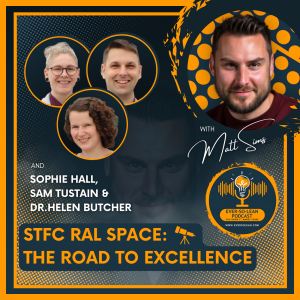
Are you looking for some inspiration on how to setup and get your organisations Continuous Improvement program up and running? Look no further than STFC RAL Space! With over 60 years of experience in space programs, RAL Space is at the forefront of driving innovation and unravelling the secrets of the universe in collaboration with leading agencies, universities and companies worldwide.
But here's the real secret to their success: continuous improvement, problem-solving, and people development. RAL Space has very recently crafted an extraordinary continuous improvement program, and today we have the privilege of hearing from the trailblazers leading the way on just how they've done it!
Matt is joined by Sam Tustain, the mastermind behind aligning the needs of the business with the CI program, ensuring that every step taken is a leap towards excellence. Dr. Helen Butcher, an admired physicist, focuses on understanding the needs of employees and collaboratively finding ingenious solutions to common challenges. And Sophie Hall, the remarkable software engineer and SCRUM master, who is dedicated to understanding the voice of the customer and delivering ground-breaking solutions that meet their every need.
Together, they form just part of a passionate and dedicated team, driving RAL Space's journey to greatness. In this episode of the Ever-So-Lean Podcast, they will share their captivating experiences, enlightening insights, and inspiring hopes for the future. Their stories will empower you to embark on your own organisation's road to excellence.
So, get ready to be captivated and inspired! Join us on the Ever-So-Lean Podcast as we explore the extraordinary story of RAL Space and discover how their pursuit of continuous improvement can launch your organisation to new heights. Sit back, relax, and prepare for an unforgettable journey!
Key Takeaways:
We could all learn from the approach of the three work-strands 1) voice of the business; 2) voice of the staff; 3) voice of the customer. Although they overlap quite frequently, the clear definition between the three listening to the voice of each of those different areas is such a great way of getting the engagement and making sure that you’re covering every aspect when you’re trying to identify the problems and find the solutions.
Obtain sponsors for projects. Seeking sponsorship from stakeholders and directors which provides an overarching buy-in from a senior leader or an external stakeholder and get them behind you just adds momentum to the project you’re working on, and a really helps it move forward.
Engaging people through mechanisms e.g. through talks, surveys, drop-in sessions etc. If you can get that buy in, it really helps with sustaining change.
Think long-term over short-term gain. It’s the long-term culture that you’re trying to create.
Value Stream Mapping very early on in their journey. This really helped them to understand their processes end to end. Doing this on the wall with Post-It notes is a great method!
Demystify terminology. Avoid focusing on terminology that’s really confusing for people to understand e.g. Japanese words. By demystifying you can make it accessible for people.
Start simple e.g. 5S activity of a small area. This approach can gain interest and inspire people because they can really see a visible change and an improvement in their workplace.
Find out more about STFC RAL Space at https://www.ralspace.stfc.ac.uk/Pages/home.aspxww.ralspace.stfc.ac.uk
To find out more about the BQF Certified, Lean Six Sigma Business Blackbelt, and other certifications available with Catalyst Consulting Ltd, visit www.catalystconsulting.co.uk
To learn more about the British Quality Foundation (BQF) visit www.bqf.org.uk
Enrol in the Online Improvement Kata & Coaching Kata Basics Course. The only Kata training created by Jeffrey K. Liker and Mike Rother!
Find out more about the Ever-So-Lean Podcast at www.eversolean.com
Please don't forget to show your support and help the Ever-So-Lean Podcast thrive by taking a moment to rate and review it, your feedback matters!
Monday Apr 24, 2023
Monday Apr 24, 2023
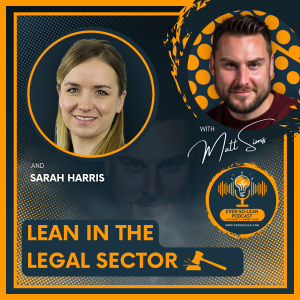
Get ready for an exhilarating episode of the Ever-So-Lean Podcast, as we put Lean in the dock, and explore how this methodology is taking shape in the world of law! Our guest for today is none other than the phenomenal Sarah Harris, a Criminal Barrister, Regulatory Partner and CI Practitioner with over a decade of experience. Sarah shares with us the incredible story of how CI has evolved in her industry, and the great work that is being done at Kingsley Napley to lead the way in this. But that's not all - Sarah is also the FIRST participant in the field of Law to successfully graduate as a Lean Six Sigma Business Black Belt, a BQF accredited program designed for organizations in the digital age - this sounds great!
Join us as Sarah gives us an insider's view of Lean in the Law industry, sharing the challenges and benefits of applying Lean principles in the legal profession. From improving efficiency and reducing waste to enhancing the client experience, we'll discover how Lean is transforming the way lawyers work. So, hold on to your peruke and get ready for proceedings, as Sarah Harris meets Matt on this episode of the Ever-So-Lean Podcast!
Key Takeaways:
It was amazing to hear how we can apply this methodology in something so different. You really can apply Lean ways to anything.
Great approach in selling the Lean concept to their senior leaders. Thinking about the long-term gains rather than the short-term gains. It was born from within, this isn’t something that the senior leadership requested, it came from the team. They presented it back to the leadership get their buy-in.
Framed in the right way build, you can earn the trust of senior leaders and then deliver the results
The traditional Lean Six Sigma/any methodology as we know it doesn’t fit every single use case. Don’t be afraid to take it and translated it into something meaningful to your organisation e.g. Sarah spoke about how they don’t have customers they have clients. So, they have voice of the client instead of customer.
Don’t feel in your organisation that you have to stick rigidly to the DMAIC steps, find a way that works for you. Convert it into a language that works in your organisation because if you don’t it’s not going to sustain, people will see through it and the last.
Make change fun and see it as an opportunity. Get those ideas coming in. Every problem is a treasure and create a mindset where every problem is a treasure. It is as an opportunity to make things better. Make it enjoyable and people will stick with it.
Find out more about Kingsley Napley at www.kingsleynapley.co.uk
If you would like connect with Sarah you can do so at https://www.linkedin.com/in/sarah-harris-883b9553/ or via email at sharris@kingsleynapley.co.uk
To find out more about the BQF Certified, Lean Six Sigma Business Blackbelt, and other certifications available with Catalyst Consulting Ltd, visit www.catalystconsulting.co.uk
To learn more about the British Quality Foundation (BQF) visit www.bqf.org.uk
Enrol in the Online Improvement Kata & Coaching Kata Basics Course. The only Kata training created by Jeffrey K. Liker and Mike Rother!
Find out more about the Ever-So-Lean Podcast at www.eversolean.com
Please don't forget to show your support and help the Ever-So-Lean Podcast thrive by taking a moment to rate and review it, your feedback matters!
Monday Apr 10, 2023
Monday Apr 10, 2023
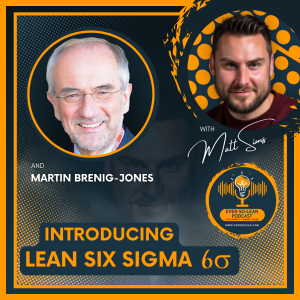
Get ready to uncover the secrets of Lean Six Sigma as we turn over some rocks and learn about this incredibly powerful methodology with a true legend in the field of operational excellence, Martin Brenig-Jones!
Join Matt and Martin as they explore what sets Lean Six Sigma apart from other methodologies and discover how it can revolutionise your organisation. With Martin's extensive experience as a certified Lean Six Sigma Master Black Belt, we'll learn how to determine if this approach is the right fit for your organisation, and how the pandemic and remote and hybrid working has changed the landscape of learning.
As the Executive Chair at Catalyst Consulting Ltd, Martin has trained and coached leaders at all levels around the world, helping to create brilliant organisations by developing people. With his co-authored bestselling book 'Lean Six Sigma for Dummies' having sold nearly 100,000 copies worldwide, we'll get exclusive insights from the expert himself.
Don't miss out on this incredible opportunity to learn from one of the best in the business and discover how Lean Six Sigma can provide you with a valuable skillset, desirable certification and transform your organisation. Tune in now and get ready to be inspired!
Key Takeaways:
Use case studies to earn trust. Build that trust, create that concept, prove that concept and then create a storyboard to sell it to the wider organisation. Earning that trust early on really does builds solid foundations to move forward.
Target low hanging fruit, prove the methodology.
Think about communications. How do you share activity and progress on what you’re doing? How do you share that with the rest of the team? How do you share that with the frontline? How do you share that with the senior leaders?
Show and tail events are a great mechanism to really visualise what you’ve done. Shout from the rooftops about how great the methodology that you followed is, what it has delivered for the business and how it’s benefited the people.
Build skills, knowledge and confidence within the organisation. It’s all about the people, if you can develop the people and take them along the journey with you, you are only going to get stronger. The organisation will grow in strength and in numbers and it’s an amazing feeling when you start to see all of these problems being solved at root cause level by various different people. Then, you can design new processes using Lean Six Sigma and similar methodologies to help you design them in a robust way.
Try and convince your senior leaders that you don’t need to know the answer at the outset of a project. Trust the process, follow the steps of DMAIC, the define the measure, the analyse, the improve, and the control. Trust that process it does work and it will guide you towards a root cause problem and a solution that fixes that problem at that level.
In time it will become the way you do things trust it go with it, it does work I promise you
Find out more about the BQF Certified courses available with Catalyst Consulting Ltd at www.catalystconsulting.co.uk
Bag yourself a copy of Martin’s co-authored best-selling books ‘Lean Six Sigma for Dummies’ and ‘Lean Six Sigma for Leaders’ at https://amzn.to/3AiA7X6
You can also learn more about Martin’s photography side-hustle creating high-quality, customisable and adaptable lighting products to raise the standard people expect from contemporary LED lighting at www.adaptalux.com
Enrol in the Online Improvement Kata & Coaching Kata Basics Course. The only Kata training created by Jeffrey K. Liker and Mike Rother!
Find out more about the Ever-So-Lean Podcast at www.eversolean.com
Please don't forget to show your support and help the Ever-So-Lean Podcast thrive by taking a moment to rate and review it, your feedback matters!
Monday Mar 27, 2023
Monday Mar 27, 2023
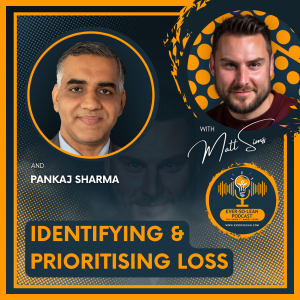
Hold on to your pencils and get ready to transform your organisation with the latest episode of the Ever-So-Lean Podcast! Join Matt as he sits down with the amazing Pankaj Sharma, Managing Director at Wahl Clipper Corporation, all the way from the stunningly beautiful country of Vietnam.
Pankaj's incredible experience in Continuous Improvement roles across the globe makes him the perfect guide to help us understand how to identify and prioritise losses in your organisation. Learn how to identify and eliminate the "8 Wastes", which are non-value-adding activities or processes within a system, process, or organization. These wastes include Defects, Overproduction, Waiting, Non-utilized Talent, Transportation, Inventory, Motion, and Extra Processing, also known as TIMWOODS or DOWNTIME. By eliminating these wastes, you can increase Safety boost Efficiency, Reduce Costs, and Improve Quality.
Pankaj is an expert in implementing the Pillars of World Class Manufacturing (WCM) and the Cost Deployment methodology, and his extensive experience of diverse cultures, different paces, and varying impacts make him the perfect guest to help us navigate this daunting challenge.
Key Takeaways:
Identify a KPI for the loss first. Look at the KPIs that are directly impacted by that loss and use them as the measure.
Make it visual to help people understand.
When visiting the shop floor, focus on the team/the people that are doing the job for them to understand the waste. They likely haven’t got the time to be working through data and looking at spreadsheets. Make it visual e.g. create Pareto or Pie Charts. Create graphs create something to visualise is the lost a really help people understand it. It goes a long way to winning people round and getting people on your side and getting them to take ownership of the problem as well.
Ask people questions to understand the loss open ended questions e.g. talk to me about, tell me why, what do you think of. Get people involved, it really does work.
Look at the source losses don’t look at the symptom losses because if you solve the source you will solve the symptom.
Don’t feel the need to collect all the data right at the very beginning. There could be loads of data and that takes time to collect and review. It’s great to have the data, it’s important but when you’re kicking off don’t wait. It’s better to get 60% now than 100% never so start off by just going out and understanding where your losses are. Observe and get some real basic data just to help you make an informed decision. You can go back and collect more data afterwards, but initially just have a look and see what you think. Ask your people.
Don’t remain in denial, adapt and overcome and what we mean by that is if you’re working on a project and you’ve put a lot of effort into, but it’s not delivering. It’s not solving the problem that you were trying to address. Don’t be afraid to stop, take account of what’s going on. Really look at you at the data/information that you have, and don’t be afraid to change approach, or change the project. Don’t deny that the fact that’s happening. It’s okay to fail and if your senior leaders aren’t allowing you that safe space to be able to fail, then you’re not in a sustainable Lean. Failure is the best way to learn.
To find out more about the certifications available with Catalyst Consulting Ltd, visit www.catalystconsulting.co.uk
Find out more about the Ever-So-Lean Podcast at www.eversolean.com
Enrol in the Online Improvement Kata & Coaching Kata Basics Course. The only Kata training created by Jeffrey K. Liker and Mike Rother!
Please don't forget to show your support and help the Ever-So-Lean Podcast thrive by taking a moment to rate and review it, your feedback matters!

Monday Mar 13, 2023
Monday Mar 13, 2023
Get ready to dive into the world of Continuous Improvement Culture, where Senior Level commitment is key! In this episode, we have two experts in the field, Richard Whitehouse, former Director of Operations, and Emily Viarnaud, Head of Sales, Membership & Marketing at the British Quality Foundation (BQF). They share their insights on why Senior Level commitment is crucial for developing a sustainable culture of improvement within an organization. We'll learn how overlooking or misunderstanding this important factor can lead to hesitance, resistance, and unrealistic objectives. But fear not! Richard and Emily offer valuable advice on how to earn trust and win support to create a Continuous Improvement culture that measures against real business metrics. And that's not all! Emily also gives us an inside look into the BQF and the fantastic work they do, including how to enter this years Excellence Awards. So sit back, relax, and get ready for an engaging discussion with our experts. Plus, stick around for a fun game of Yes/No with Richard and Emily!
Key Takeaways:
Senior stakeholder engagement is so important to a continuous improvement culture. If you can get it, it really helps, but it might take time.
Target quick wins, that low hanging fruit, those really quick wins that will earn trust with senior leaders. If you can earn their trust and get their belief in what you’re trying to create, that belief in a continuous improvement culture, you are 99% of the way there because from small acorns mighty oaks grow.
Don’t be tempted to expand to fast. It’s really tempting to run 1,000 miles an hour, but sometimes it’s better to go a little bit slower and really get those foundations and mechanisms right.
Focus on the culture, not the program. A really good way of doing that is to build your reporting around business KPIs. This then breeds the culture and people are not focusing on special Lean KPIs or continuous improvement, they are focusing on business KPIs. Use continuous improvement to drive those metrics, that way it becomes part of the culture.
Make CI part of the normal work (the way we do things). Every single process will have opportunities for continuous improvement, look for those quick wins and you’re well on your way to get in your senior stakeholders engaged in what you’re trying to do.
Find out more about the British Quality Foundation at www.bqf.org.uk
To find out more about the certifications available with Catalyst Consulting Ltd, visit www.catalystconsulting.co.uk
Enrol in the Online Improvement Kata & Coaching Kata Basics Course. The only Kata training created by Jeffrey K. Liker and Mike Rother!
Find out more about the Ever-So-Lean Podcast at www.eversolean.com
Please don't forget to show your support and help the Ever-So-Lean Podcast thrive by taking a moment to rate and review it, your feedback matters!
Monday Feb 27, 2023
Monday Feb 27, 2023
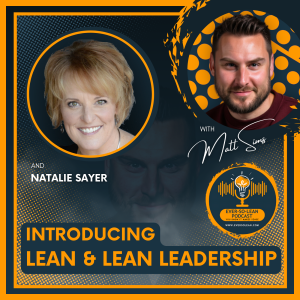
In this episode of the Ever-So-Lean Podcast, we are diving deep into what Lean actually is, why we should be doing it, and what it takes to sustain a culture of Continuous Improvement. But wait, don't hit the snooze button just yet! We have an incredible guest who is sure to inspire and motivate you on your journey towards Lean Excellence.
Get ready to be energized by the one and only Natalie Sayer, a true heavyweight in the Lean and Continuous Improvement world! As the co-author of the renowned "Lean for Dummies" book, Natalie has a global influence and has helped countless leaders and teams navigate through this VUCA world we live in (Volatile, Uncertain, Chaotic and Ambiguous).
As the Principle & Founder of The Blair David Company, Natalie acts as a Thinking Partner & Executive Coach, creating strategies and inspiring teams to achieve greatness. Her wealth of experience and inspiring stories will leave you feeling empowered to tackle any challenge that comes your way.
So, whether you're just starting out on your Lean journey or are a seasoned veteran, you won't want to miss this episode! Natalie's advice and guidance will give you the tools and motivation you need to create a culture of continuous improvement that will last for years to come. So sit back, relax, and get ready to be inspired by the incredible Natalie Sayer, as she joins Matt on the Ever-So-Lean Podcast!
Key Takeaways:
Positive change comes through people, it’s all about people!
Blame the process not the people.
Look for something in the operation to focus on, don’t try and go after everything e.g. look for safety improvements or quality improvements. Look to improve flow or how different shifts are talking to each other. All these processes are common in in most operations and provide a good starting place.
Ask lots of open-ended questions, talk to me about, tell me why what’s the purpose of this what do you think about, that really focus on what’s going on. This is because sometimes our eyes don’t tell us the full story or brain is very clever at filling in the gaps for us and sometimes those gaps on actually what we’re looking for.
Sketch the problem, by sketching the problem you can really see what is in front of you, and therefore understand it. There’re no language barriers in a sketch. There’re no words to translate, a sketch crosses every single language in the world.
Find out more about the Blair David Company at www.blairdavid.com
Lean for Dummies - https://amzn.to/4cio7Ce
To find out more about the certifications available with Catalyst Consulting Ltd, visitwww.catalystconsulting.co.uk
Enrol in the Online Improvement Kata & Coaching Kata Basics Course. The only Kata training created by Jeffrey K. Liker and Mike Rother!
Find out more about the Ever-So-Lean Podcast at www.eversolean.com
Please don't forget to show your support and help the Ever-So-Lean Podcast thrive by taking a moment to rate and review it, your feedback matters!